

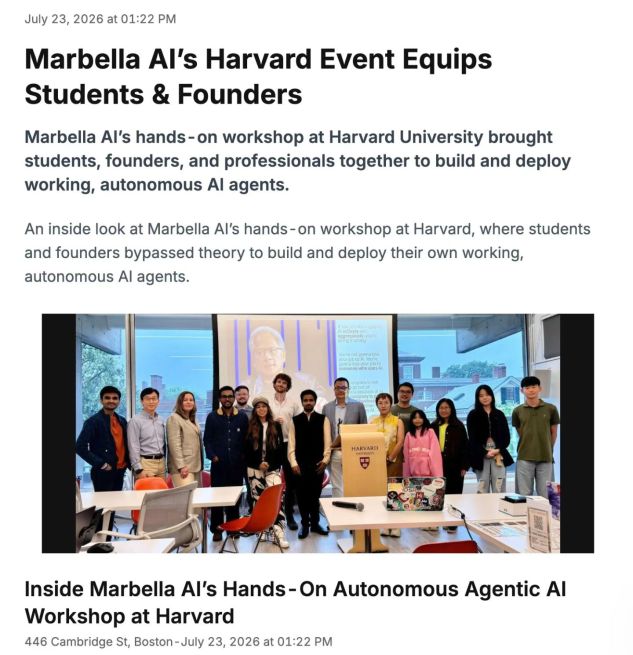
Over summer 2026 , a high school student turned a problem close to home into a working AI product. Leo Ling(Ziqi Ling), a student at Shattuck-St. Mary's School in Minnesota, built Client Compass, an AI-powered client-management platform for insurance agents under the guidance of Dr. Jason Dou's team. It was one of Marbella AI's project-based learning (PBL) projects, which pair hands-on AI skills with a real-world decision domain through a build-and-test approach.
Background and Motivation
The idea grew out of Leo's family, which has worked in the insurance industry for over 20 years. Before building anything, Leo Ling studied how insurance agents actually work and found three recurring pain points:
• Client information is scattered.
• Past communications are hard to trace.
• Personalized follow-up is slow and inefficient.
The response was an AI platform that brings client profiles together, drafts tailored communication automatically, and sends smart reminders. The aim was to make agents' daily client management more efficient and their service better.
What Client Compass Does
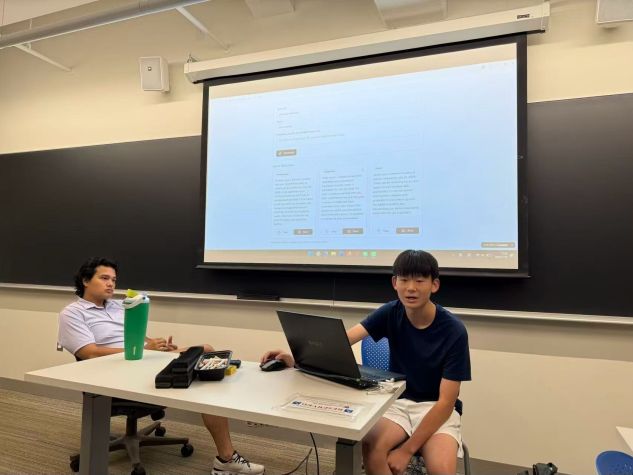
Client Compass is a web platform built around detailed client profiles. Agents record each client across several dimensions: basic information, family structure, assets and liabilities, interest tags, and more. The platform then puts each profile to work in three ways:
• Tailored outreach. It drafts WeChat messages, emails, and phone-call outlines for each client. Agents can save any follow-up as a to-do with one click and receive automatic reminders.
• Product recommendations. It suggests insurance products suited to the client's profile, with talking points for presenting them. This is designed to cut the time agents spend preparing for each conversation.
• Contact Center. It generates targeted messages for key moments in the relationship: birthday greetings, renewal reminders, claims assistance, and invitations to in-person events.
The Contact Center in particular reflects the project's focus on the long-term quality of client relationships, not only day-to-day efficiency.
How It Was Built
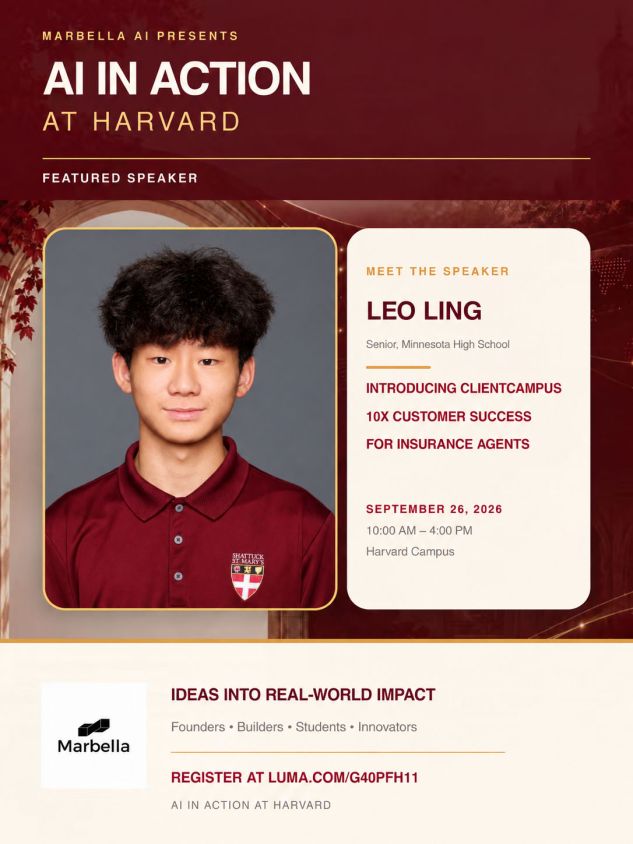
The project relied heavily on AI tools for coding. Leo Ling took on the work that decided what got built: conceiving the product, defining the problem, analyzing requirements, and validating ideas with industry experts. Within Marbella AI's PBL program, Leo Ling took Client Compass from idea to working product in a single summer.
The point was never to use AI to generate text or interfaces for their own sake, but to solve a real business problem. The hard part was turning abstract needs into concrete features, what Leo Ling calls a shift from "passive use" of AI to "active creation." The project also sharpened Leo's interdisciplinary thinking and deepened an understanding of what AI can and cannot do in practice.
Feedback from Practitioners
The response was encouraging: when Leo Ling presented the project, attendees saw both market potential and social value in it. Three comments stood out:
• Xue Hong, a senior insurance expert, affirmed its value for maintaining client information over the long term.
• Alex Shi recommended adding communication-history tracking to support long-term client relationships.
• Jerry Liu, speaking from an investor's perspective, saw potential for the project to go deep in a single vertical market. In his view, a more complete, end-to-end workflow could make it an efficient collaboration tool for insurance agents.
Alex Shi 's suggestion is telling. Tracing past communications was one of the three pain points the project began with, yet the prototype did not address it directly. It took a working product in front of practitioners to surface the gap: the build-and-test loop at work.
Limitations and Next Steps
Client Compass is still an early prototype, tried so far by a small group of family members and supporters. Known gaps include inadequate data-security safeguards and no direct integration with WeChat or email.
Once college applications are done, Leo Ling plans to return to the project with three priorities:
• Learn from users. Build better channels for user feedback, study how frontline agents actually work, and keep iterating on the product experience.
• Protect client data. Adopt professional data-security solutions so that client privacy protection meets industry standards.
• Find a business model. Explore commercialization, such as a free trial followed by a subscription for individual agents, to turn a personal project into a sustainable product.
For Leo Ling, the project built practical skill with AI tools and a user-centered product mindset. It meant learning to judge a technical solution the way industry practitioners would: is it effective, and is it practical?
The lesson for executives reaches beyond the classroom. When AI handles much of the coding, the scarce work is defining the right problem and testing with real users. Leo Ling built a working prototype in one summer; the harder, more valuable work was deciding what to build and learning what was still missing.
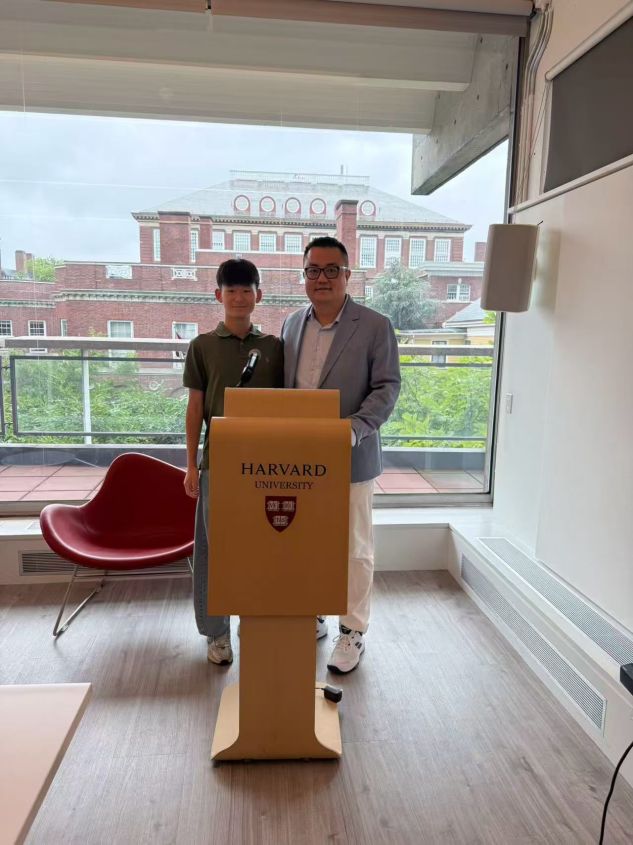
Dr. Jason Dou is the Founder and CEO of Marbella AI (marbellaai.com), whose mission is to empower the next generation with AI literacy and to identify and develop future AI leaders. Through project-based learning programs, workshops, and master classes, Marbella AI has trained more than 1,000 people, from high school students to business executives. Jason holds a B.S. in Computer Science from Peking University, an M.S. in Information Science from Cornell University, and a Ph.D. in Computer Engineering from the University of Pittsburgh. He did his postdoctoral work in AI at Harvard University.