

“This is the first time I have gained an in-depth understanding of Qiong wine. Its brewing techniques and profound historical heritage have laid a solid foundation for building the brand of the production area,” Li Shihai, deputy editor-in-chief of ASEAN Headline of Cambodia, said in an interview on Oct. 15.
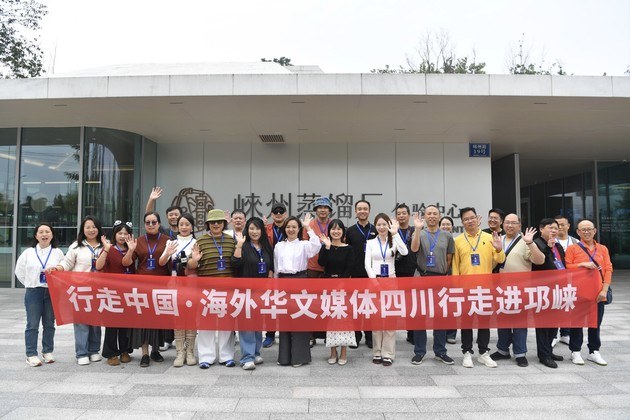 Overseas Chinese media representatives visit Qionglai during the “Journey Through China · 2026 Overseas Chinese-Language Media Trip to Sichuan.” Photo by Wang Lei
From Oct. 14 to 15, heads and reporters from 20 overseas Chinese-language media organizations in various countries took part in the “Journey Through China · 2026 Overseas Chinese-Language Media Trip to Sichuan” and visited Qionglai, touring the Laizhou Distillery and Yuanwozi Winery to learn about the story of heritage and innovation in this thousand-year-old wine town.
Qionglai has a history of 2,300 years as a city and more than 2,000 years of winemaking. Located on the “world golden winemaking belt” at 30 degrees north latitude, it is a source production area of the Yangtze River basin and a famous wine production area beneath the snow mountains. Relying on its exceptional natural endowments and profound brewing heritage, the city has laid out four major tracks — quality baijiu, international spirits, low-alcohol trendy drinks and specialty wineries — steadily consolidating the foundation of its liquor industry and building a liquor development ecosystem in which the whole chain and multiple categories grow together. Today, Qiong wine has been exported to 25 countries and regions, including Russia, South Korea and Australia, and is moving from Qionglai to dining tables around the world.
As one of the few distilleries equipped with both pot stills and column stills, the Laizhou Distillery covers a range of products including whisky, vodka and gin. Its supporting Laizhou Spirits Culture Experience Center opened to the public in April 2025 and is China’s first whisky tourism and experience center. On Oct. 14, the overseas Chinese-language media group visited the Laizhou Distillery and, following six modules — explore, learn, make, tour, stay and dine — experienced for themselves the integrated innovation of traditional regional features and the modern distilled-spirits industry.
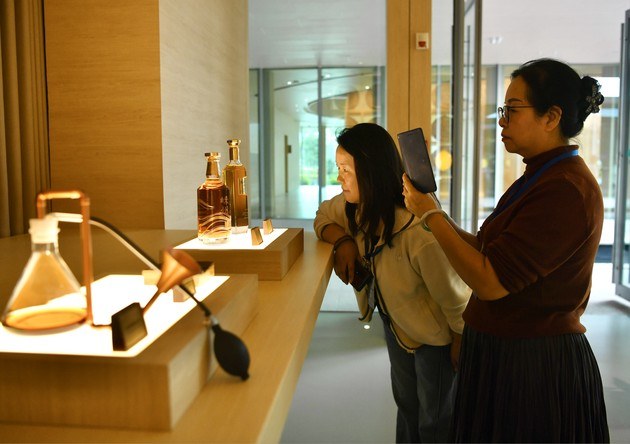 Overseas Chinese media representatives visit the Laizhou Distillery. Photo by Wang Lei
“I had tasted Laizhou’s spirits before, and only after visiting in person did I realize how considerable the scale of the distillery is and how impressively the supporting experience center has been built,” said Dai Kun, China operations director of the Brazil-China News Agency and a whisky enthusiast, who regards the Laizhou Distillery as highly distinctive and outstanding among Chinese whisky enterprises.
“Laizhou whisky incorporates Chinese elements such as highland barley and yellow rice wine, creating a whisky with a uniquely Eastern flavor,” Dai Kun said, expressing the hope of promoting the products overseas so that more people can taste Chinese-flavor whisky, and believing that its distinctive taste will surely win the affection of whisky lovers abroad.
Yuanwozi Winery, adjacent to the national 5A-level Mount Tiantai scenic area, covers more than 800 mu, including over 600 mu of forest, and enjoys exceptional natural and ecological resources. From an organic raw-material growing base, an exhibition area for traditional brewing techniques and a forest area for aging wine in earthenware jars to a fine-wine tasting space and then to wine-culture-themed homestays and ecological leisure facilities, it links wine-related experiences together and is one of China’s rare experiential baijiu wineries.
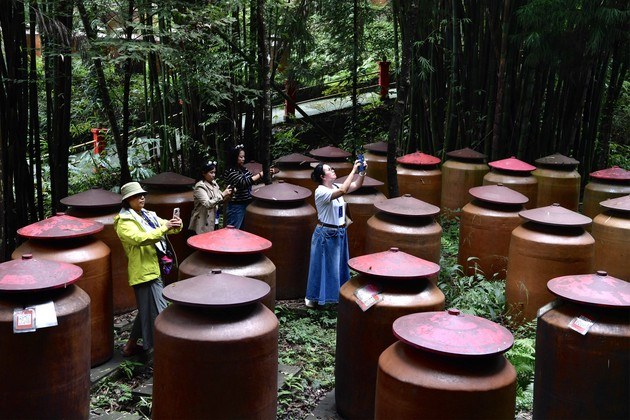 Overseas Chinese media representatives experience the charm of aging wine in earthenware jars in the forest at Yuanwozi Winery. Photo by Wang Lei
On Oct. 15, the overseas Chinese-language media group visited Yuanwozi Winery, where distinctive homestays are arranged along the slope of the mountain and more than 5,000 rustic clay wine jars are tucked among the layered, dense woods. The representatives went into the brewing workshop to observe the full traditional baijiu brewing process, lingered in the wine-storage forest to immerse themselves in the distinctive charm of aging wine in earthenware jars, and experienced firsthand the unique advantages of Qiong wine’s ecological brewing.
“Wineries overseas are generally small in scale, while many domestic distilleries like Yuanwozi Winery are exploring the integrated development of wine, culture and sports, and building diverse supporting businesses such as dining, experiential consumption and accommodation, which makes for a very good experience,” Li Shihai said. He suggested that Qionglai should continue to step up brand promotion and upgrade its model for developing the liquor industry, noting that “in terms of exports, the ASEAN market has a high degree of recognition and broad acceptance of Chinese baijiu, and Qionglai can build on this advantage, take ASEAN as an important breakthrough and steadily broaden overseas sales channels for baijiu.”