

“Jiarong Tibetan art has left an extremely deep impression on me. For people overseas, it is hard to imagine the architectural style and way of life unique to this place; visitors who come here will certainly feel the trip was worthwhile.” On Oct. 11, Lin Zhanji, president of Australia’s Chinese Herald, said in an interview that he hoped to pass this unique experience on to more friends overseas and attract them to Aba, to feel for themselves the beauty of Tibetan culture.
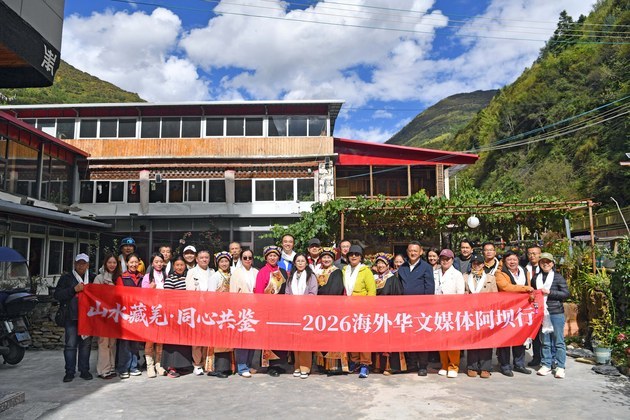
That day, the “Mountains and Waters of the Tibetan and Qiang Lands, Appreciated Together — 2026 Overseas Chinese-Language Media Trip to Aba,” hosted by the Sichuan Overseas Friendship Association and organized by the Sichuan Branch of China News Service, arrived in Ma’erkang City of the Aba Tibetan and Qiang Autonomous Prefecture. Heads and reporters of 20 overseas Chinese-language media organizations from countries around the world made on-site visits, focusing on Ma’erkang’s lively practice of deeply cultivating ethnic cultural protection, activating red resources and empowering the integrated development of culture and tourism, and recording with an overseas perspective the continuity of Tibetan cultural heritage and the new face of rural development.
The Zhuokeji Tusi Official Residence in Ma’erkang City is a typical piece of Jiarong Tibetan architecture, bringing together tusi system culture, Jiarong architectural art and the red culture of the Long March in one; it is known as “a pearl in the history of Oriental architecture” and was listed as a national key cultural relic protection site in 1988.
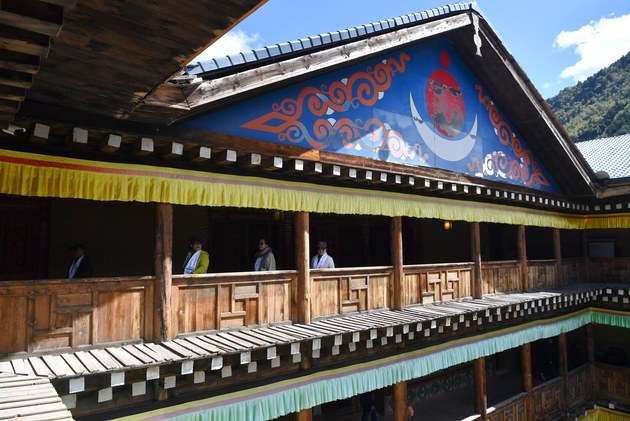
Railings wind around the pillars, and the pillars support the railings; the five-colored glass in the Han-style lattice windows glows with color in the light of the setting sun... On the morning of that day, the overseas Chinese-language media representatives walked into the Zhuokeji Tusi Official Residence and marveled at the simple, weighty atmosphere inside the building and the superb Tibetan and Han architectural essence blended into it. “I learned that the whole building uses a traditional earth-and-timber structure, without a single screw, with a rich ethnic character; standing among the mountains, it is truly magnificent,” exclaimed Wang Shuhua, deputy editor-in-chief of Nigeria’s West Africa Unified Business News.
The Zhuokeji Tusi Official Residence is not only a precious treasure of ethnic architecture but also a spiritual landmark engraved with red memory and bearing witness to ethnic unity. In July 1935, during the Red Army’s Long March, the Political Bureau of the CPC Central Committee stayed here for a week and held the Zhuokeji Meeting. In Wang Shuhua’s view, this ancient building carries a resilient and unyielding red spirit and tells the moving story of the blending and coexistence of all ethnic groups; it is an important vehicle for passing on the red genes and continuing the ethnic cultural heritage.
Jiarong Tibetan embroidery has been handed down from generation to generation and has a long history; it is an indispensable traditional handicraft in the life of the local Tibetan people. On the afternoon of that day, the overseas Chinese-language media representatives visited the Ma’erkang Jiarong Skilled Embroidery Cooperative, led by Ren Zhenchu, a provincial-level representative inheritor of Jiarong Tibetan weaving and cross-stitch embroidery as intangible cultural heritage. In the cooperative, the embroiderers plied their needles and threads, passing on the craft at their fingertips; every stitch embodies Tibetan craftsmanship and ethnic flavor.
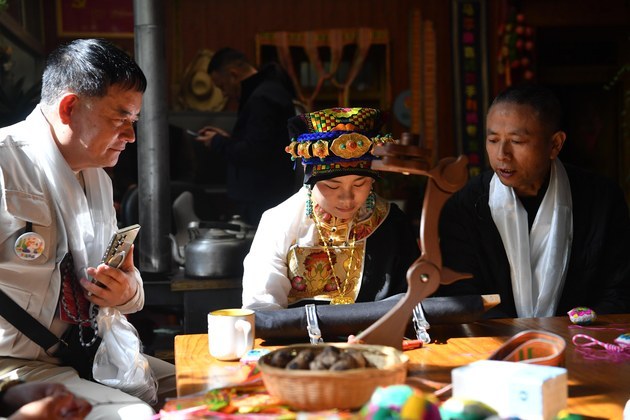
According to the introduction, the cooperative is a distinctive intangible heritage workshop for passing on Jiarong Tibetan embroidery culture, following the development model of “intangible heritage inheritance plus skills training plus home-based employment.” It focuses on embroidery skills training for poor women, women with disabilities and women left behind in Ma’erkang City and neighboring counties; more than 3,600 women have taken part in training, and more than 2,600 women have been helped into flexible home-based employment.
“Traditional Tibetan embroidery belts, headscarves and other folk items are in strong market demand and have long been in short supply.” Ren Zhenchu said that at the same time the cooperative has developed, in line with modern aesthetics, more than 20 kinds of Tibetan embroidery cultural-creative products, including ethnic clothing, cushions, sachets and decorative pendants; they are deeply loved by young people and keep the ancient intangible heritage brimming with vitality in the new era.
“This is my first close encounter with Jiarong Tibetan embroidery; the intense collision of colors and the exquisite design are simply stunning.” Cai Wenqi, a multimedia reporter with Australia’s Tasmania Chinese Times, bought Tibetan embroidery souvenirs on the spot and planned to take them home to share this trip with relatives and friends. She believes that the uniquely distinctive Jiarong Tibetan embroidery will win the affection of many people overseas.