

On Oct. 11, a reporting group of overseas Chinese-language media walked into Songgang Village, Songgang Township, Ma’erkang City, to visit the long-famous Songgang Zhibo watchtower cluster. Known as “China’s Tower of Pisa,” these centuries-old ancient towers bring together Jiarong architectural wisdom, Qing-dynasty tusi history and red revolutionary memory. Where heritage revitalization, the integration of culture and tourism and a Party-building-led collective economy converge, the village at the foot of the ancient towers has also brought cultural continuity and rural revitalization into resonance.
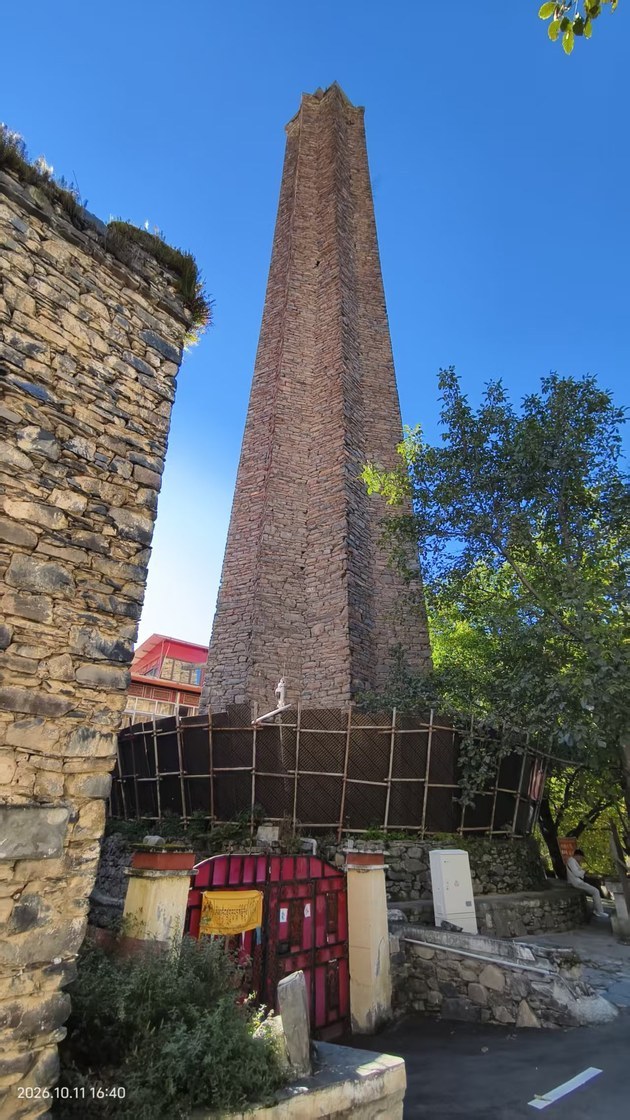
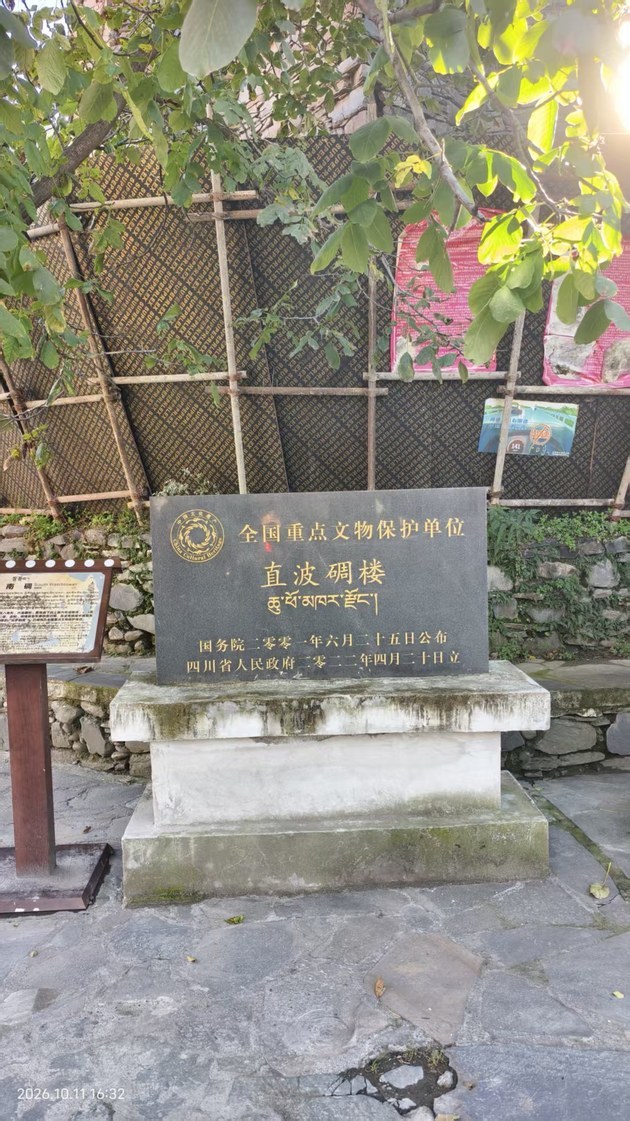
The watchtower cluster stands in Zhibo Village, Songgang Township, and was first built during the Qianlong reign of the Qing dynasty; it is an important surviving part of the Songgang Tusi official residence and a national key cultural relic protection site. The two octagonal ancient towers, north and south, stand against the mountain and face each other across the air; octagonal outside and circular within, they are built throughout of natural stone and yellow clay with fine craftsmanship, tapering in stages from bottom to top, imposing in presence with sharply defined edges. Most astonishing is the southern tower: over several hundred years, as geological change and repeated strong earthquakes followed one another, it has leaned 2.3 meters in all yet never fallen — a measure of how refined the construction technique is and how strong its seismic resilience. The industry therefore calls it “China’s Tower of Pisa,” and it is a precious living fossil of the ancient watchtower building technique of the Jiarong Tibetans.
The value of this watchtower cluster is made all the weightier by its red heritage. On one side it is a carrier of Qing-dynasty tusi system culture, on the other it is the site of the Red Army’s Songgang Township Soviet; red marks, tusi culture and the intangible heritage of ancient architecture interweave here, weaving a four-in-one resource system of “ancient heritage buildings, tusi culture, red memory and intangible heritage experience.”
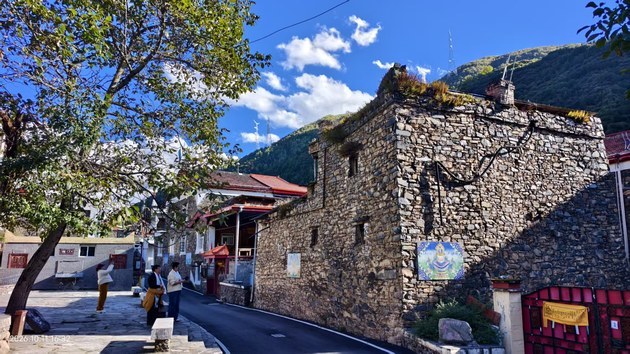
This reporter also learned the basic facts about Songgang Village: it covers 41 square kilometers, with an average elevation of 2,500 meters, and has extensive grassland, forest and farmland resources. In recent years the village has taken Party building as its axis, working solidly along the path of “building Party branches in the industrial chain, Party members taking the lead by example, and the masses developing together,” and has introduced a “branch plus” collective economy model to awaken its rural resources one by one. The collective economy has grown accordingly, with annual income now exceeding 200,000 yuan, benefiting both the collective and the villagers.
At the same time, the visitor flow brought by the 4A-level Keping Tianjie scenic area, together with the policy benefits of rural revitalization, has opened new space for Songgang Village. Digging deep into Jiarong Tibetan folk customs and the history and culture of the ancient watchtowers, the village has built three distinctive streets — an ethnic-style Tibetan village, Tibetan-style specialty restaurants, and a display and sales area for local farm produce — and has created a Ma’erkang rural cultural tourism demonstration base that combines sightseeing and photo spots, cultural study tours, leisure experiences and specialty food. The thousand-year-old watchtowers thus step beyond their identity as a “single heritage site” to become an immersive cultural tourism destination that can be experienced, consumed and shared, giving villagers long-term support for employment close to home and steady increases in income.
Songgang Village’s industries go beyond cultural tourism. Highland tomatoes, highland strawberries and other specialty fruits and vegetables are grown here in contiguous plots, forming a pattern in which many businesses develop side by side with cultural tourism; villagers receive income from land transfer, can work at the base and receive dividends according to their shares, and their channels for raising income keep widening. An industrial pattern oriented toward “cultural tourism as the mainstay, agriculture as support and diversified income growth” is gradually taking shape.
Walking through Songgang, the leaning towers, weathered by a hundred years, still stand towering and silently tell the story of the years, while the new Tibetan village not far away is lush and full of life. The overseas Chinese-language media representatives remarked that the Songgang Zhibo watchtower cluster is a marvel of ethnic minority architectural art, and that Songgang Village is a model of heritage revitalization, tourism empowerment and Party-building-driven village development. They said that in future they would rely on overseas communication channels to tell more overseas audiences about Aba’s ancient architectural culture, red stories and rural revitalization practices, so that the humanistic beauty and the progress of the Tibetan and Qiang lands are spread abroad.
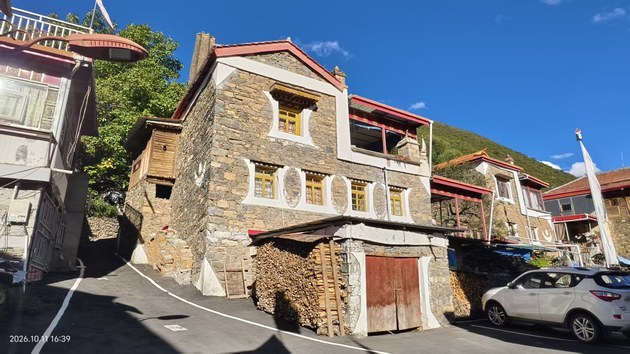
Today Songgang Village sees its ancient watchtower heritage carried on, its cultural tourism industry prospering day by day, and the face of the village renewed. The local authorities say that in the next stage they will continue to protect the national-treasure ancient buildings, carry on the red roots and strengthen distinctive industries, empowering rural revitalization with culture, so that the thousand-year-old watchtower cluster shines in the new era and the plateau village moves step by step toward a tomorrow of prosperity, ecological livability and thriving industry.